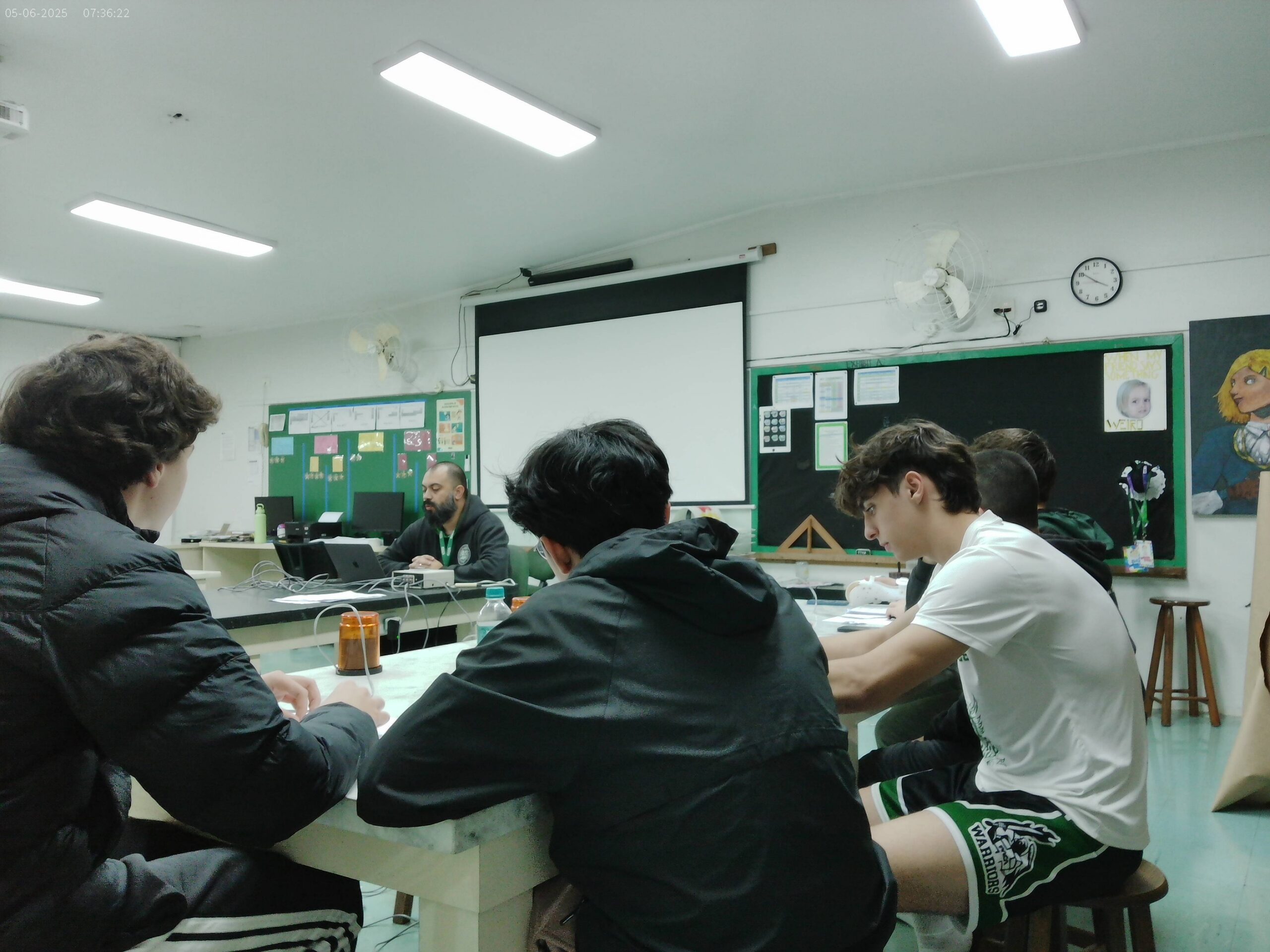
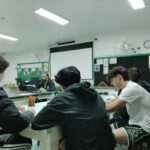
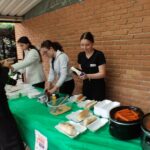
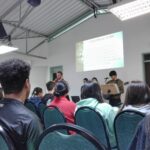
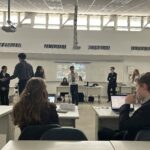
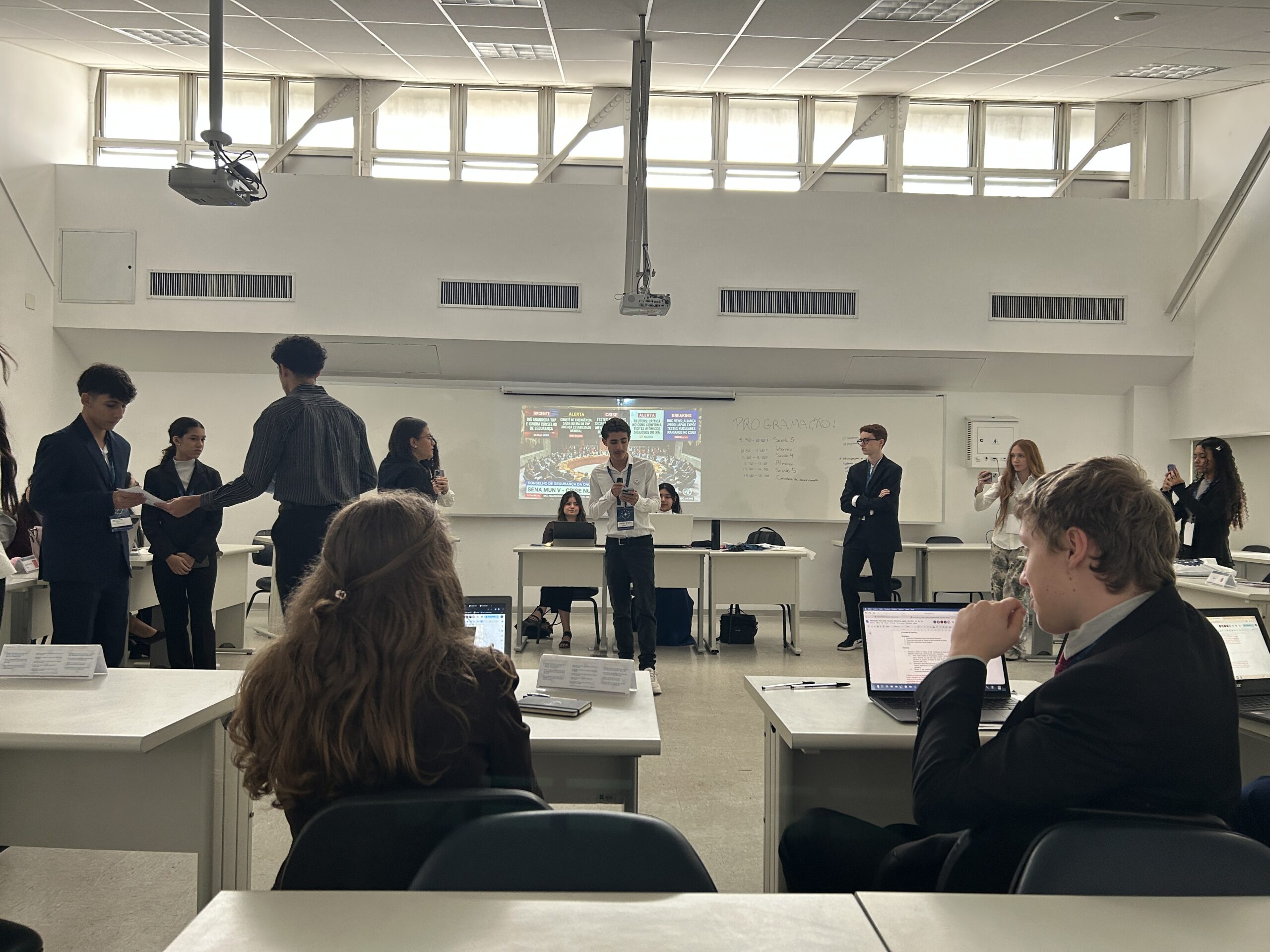
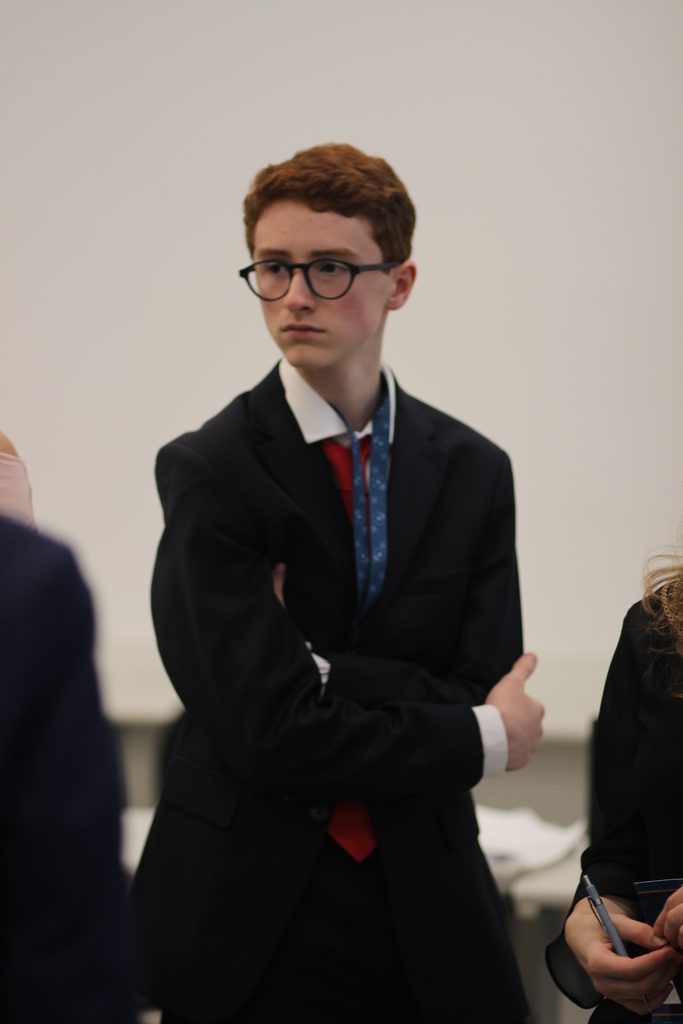
Caption: Felipe Wilcken and his delegation prepare to face a crisis in their committee during one of the Saturday afternoon committee sessions. [by Cristina Meier]
by Arthur Lobato
The PACA MUN (Model United Nations) team attended SenaMUNV at the Senac University of Santo Amaro joining students from schools such as Avenues and St. Nicholas school of Alphaville and Pinhieros on September 11 and 12 to practice diplomacy through debate and discussion in an effort to increase their public speaking and debating skills using this practice United Nations model.
Although PACA had an MUN team in years past, this club has been absent among student activities until last year. An 11th grade student from last year got it started again. This year, MUN is led by Lara Pedrosa and Felipe Wilcken who are currently tenth grade students at PACA.
MUN is a simulation of the United Nations, and practices communication in the same way in which the member countries of this organization do. Several assigned delegates are given their respective topics to study and represent as their assigned nations. The preparation for SenaMUN was the same process for the team of six students who were attending as delegates.
The PACA team left at around 10:45 am (around the start of third period) and then took a bus to reach Senac. After they had all prepared themselves, headed over to the auditorium for the introductions and for orientation of the event.
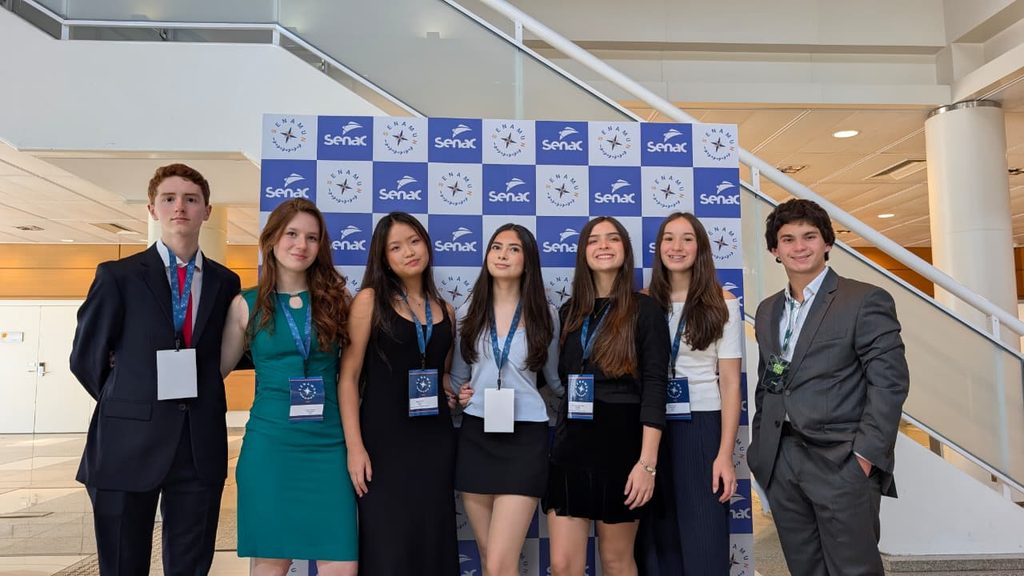
During the opening ceremonies, the secretaries for each delegation of SenaMUN were introduced by Letícia Leocado. Leocado is the current Secretary-general of communications for Senac.
It was the role of Senac, the host of this MUN conference, to plan and organize a series of different delegation rooms with a specific topic that would be discussed. After the delegations were organized, students were invited to join these delegations as representatives of a specific country who is in support or opposed to the specific topic to be discussed. The Senac MUN team would choose someone to be the secretariat and chair of each of the delegations.
Among the delegations were a special trial committee simulating a trial of Socrates in times of Ancient Greece, a Security Council analysing the risk of nuclear control by UN countries, the Economic and Social Council (ECOSOC) discussing the value of Neo-Luddism in today’s society, Historical Security Council addressing the Russian Civil War (1919) or analyzing the nuclear arms race among nations that are at risk. Most of the committees were in Portuguese, but some of them were conducted in English.
After the delegates were given their assigned rooms for their committees, they all went out to prepare themselves.
The entire SenaMUN conference was a two day occurrence, lasting between September eleventh and twelfth, and finishing with a closing ceremony from 2-4pm.
Sophomore Felipe Wilcken is one the MUN team leaders for PACA. This was his third conference and he was representing the United Kingdom on the Security Council to analyze nuclear safety.
Each delegate was given access to research documents to help them prepare for the delegation activities. Delegate Wilcken explained the challenge of being prepared on the first day of the conference.
“I struggled on the first day,” Wilcken said. “Both because I was unprepared and also because I had the least experience there. But I think I was able to talk and argue a lot more during the second day, after I’d accustomed myself to it.”
Another PACA team delegate was sophomore Sophia Vergara. This was her second MUN conference. In her mock trial, she represented Aristophanes in her special committee. In this case, she did not represent an entire country because it was a trial scenario. They were recreating a scenario in ancient Greek history in which they were trying Socrates for his alleged crimes of corrupting the youth.
The two men were contemporaries in Athens, and Aristophanes once depicted Socrates as an impious, eccentric man, which set in various prejudices in Athens. To be ready for this trial scenario, it was necessary for Vergara to do her research ahead of time.
“I tried my best to do so,” said Vergara, “Yes, MUN requires a lot of preparation, so it’s always good to be prepared.”
PACA team members, sophomore Lara Pedrosa with freshmen Isabela Jikal and Talia Woods were together in their committee. They were representing Guatemala, Nicaragua and Ecuador respectively. Their committee debated the extent of the cold war effects on Latin America. Lara is the most experienced of the PACA MUN team this year. This was Pedrosa’s fourth conference and she has learned a lot about the process of speaking at a delegation in the past year. Teaming up with freshmen, afforded her the chance to support them at their first MUN conference.
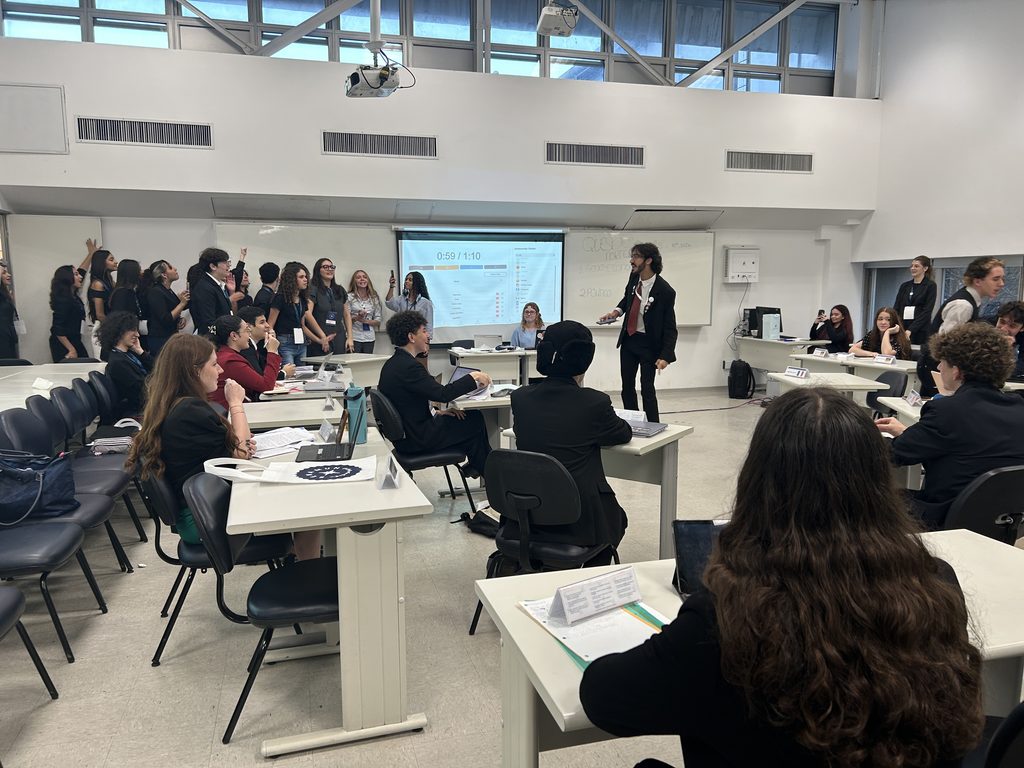
“No, I was not as prepared as I’d wanted to be,” said Pedrosa, “since this last week or so has been a very busy time.”
Sophomore Luisa Vilela, represented Indonesia in her committee for the study of Neo-Luddism and the Effects of AI use in the workplace. Her committee created a hypothetical war scenario based in the year 2053 in which rebels had disabled AI and other major technologies.
For those unfamiliar, summarized, Luddism is the ideology of not having to use technology in your day to day, and returning to more natural ways of living.
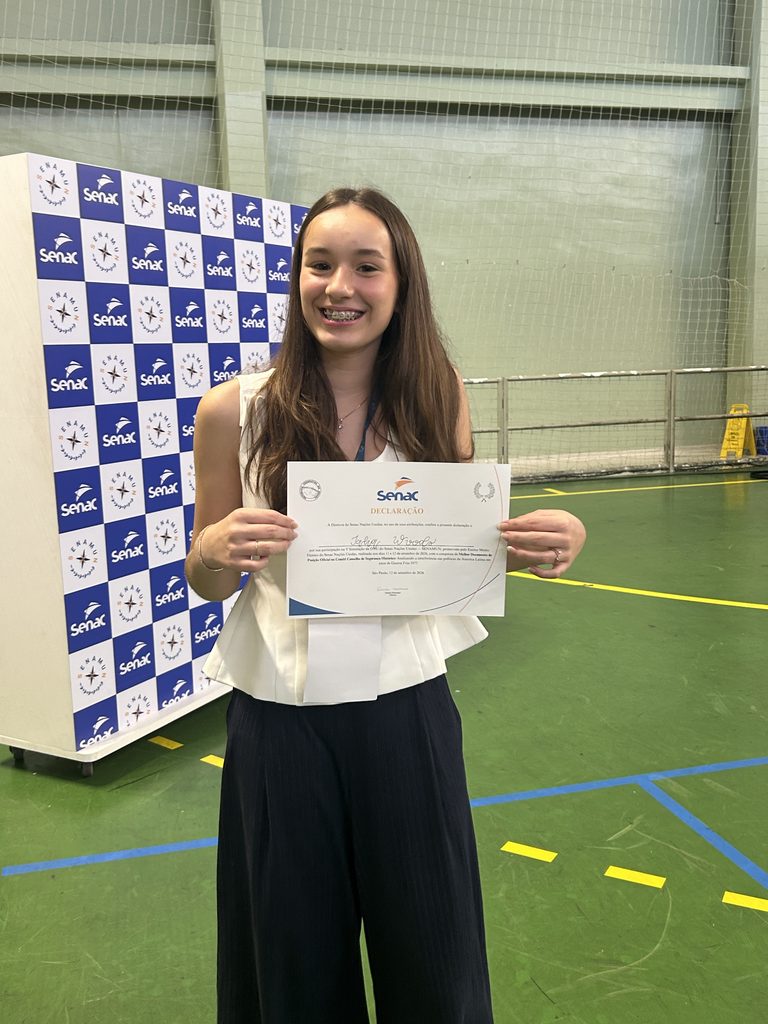
At the end of the two day conference, a closing ceremony was given in which recognition for outstanding papers and outstanding performances between delegation members was given. Although it is not common for new MUN members to receive recognition, one of PACA’s newest members, Talia Woods, earned recognition for best paper for her committee.
These six students were not the only MUN team members to represent PACA. There are other students involved with MUN who were not able to sign up for this event, but plan to attend other MUN conferences in the future.
Among the upcoming opportunities include a three day event at Escola do Futuro called MUNBricks happening at the end of September of this year and several MUN conferences happening in the second semester of the school year.