





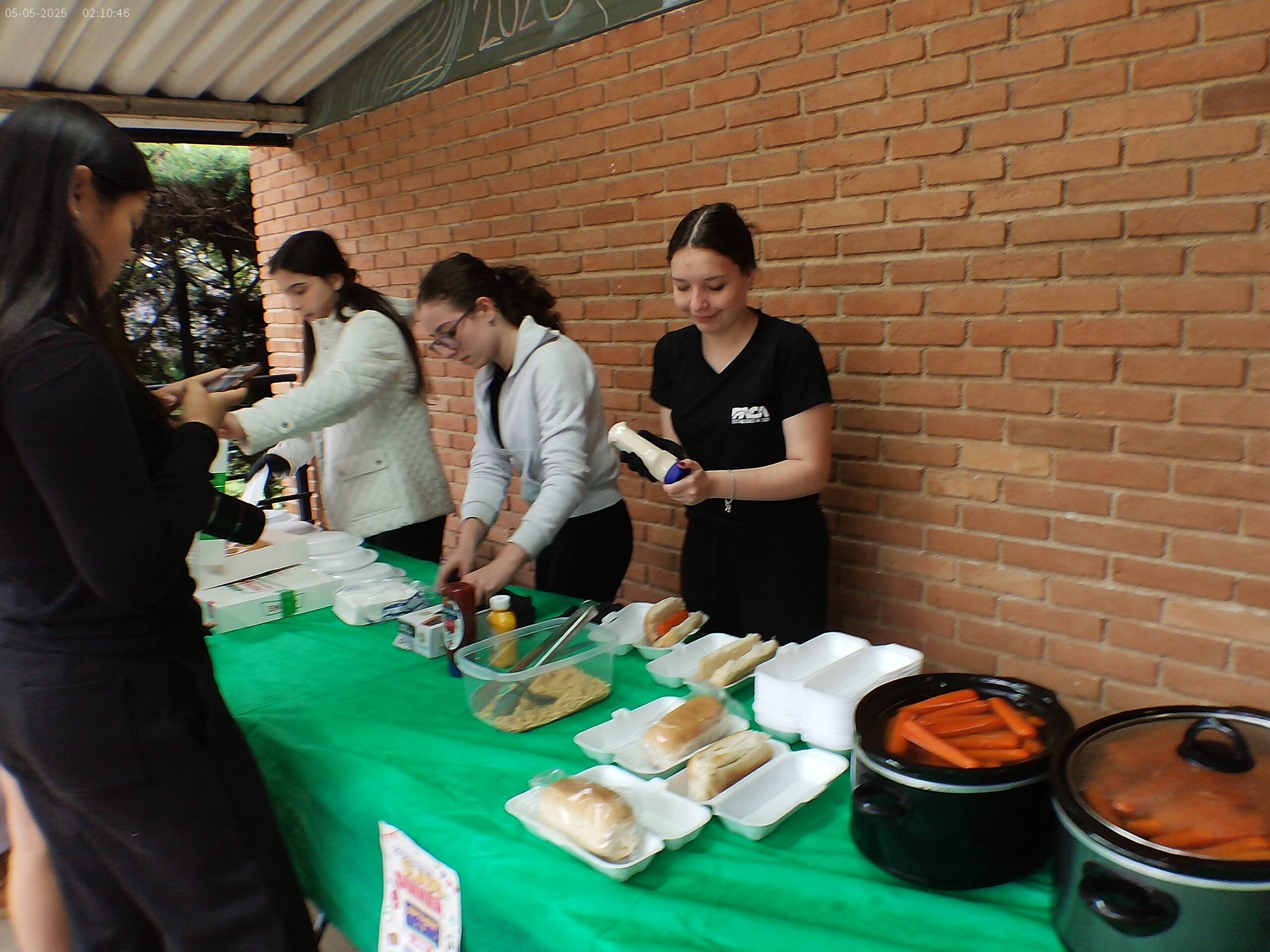
Caption: The tenth grade students use their organizational skills and teamwork to generously serve a hotdog to a client. [by Dr. Cristina Meier]
by Levi Penha
The expansion of the athletic schedule brought many new opportunities for PACA high school classes to earn money as the number of home games nearly doubled since the first semester season of last year.
The month of September alone has seen the number of home games increase from four games to seven games, giving each grade one or two chances to sell class dinners by the end of the first quarter.
Class dinners have been part of the game schedule for many years. Each year gives the new group of student leadership (as STUCO or class officers) a chance to innovate and learn more about serving meals to the community while they watch a home game.
Instead of only serving with no talking, laughing, or communication, students are creating memories as they work. That is one of the main reasons class dinners were created.
As Ysabel Flurry stated, “I remember a lot of times during my class dinners where people would start singing the songs that were playing and dancing the TikTok dances. Honestly, class dinners are so much fun even though it requires hard work.”
They might seem easy to organize, but a whole different story lies behind. Class president, Marcelo Pasquali said that the most difficult part of organizing a class dinner is separating tasks to be done between class officers and classmates while supervising and keeping everyone in check.
The class dinner organization begins with a spreadsheet created by the PACA athletic director, Renato Sousa, which he lines up with the list of upcoming home games that are scheduled to take place at PACA. This list is shared with the STUCO officers and sponsors and they give the Vice Presidents of each high school grade the opportunity to sign up for at least one dinner during the semester.
Usually, the VP discusses the options with the class presidents and other class officers and then they choose the date or dates that they want to be responsible for serving. As each class prepares for their class dinner, each class president is expected to make sure everyone is fulfilling their tasks. That president is also expected to supervise the service of the dinner unless they are taking part in one of the games. They have to calculate the quantity of food and the amount of money the class will spend relevant to the amount they will gain.
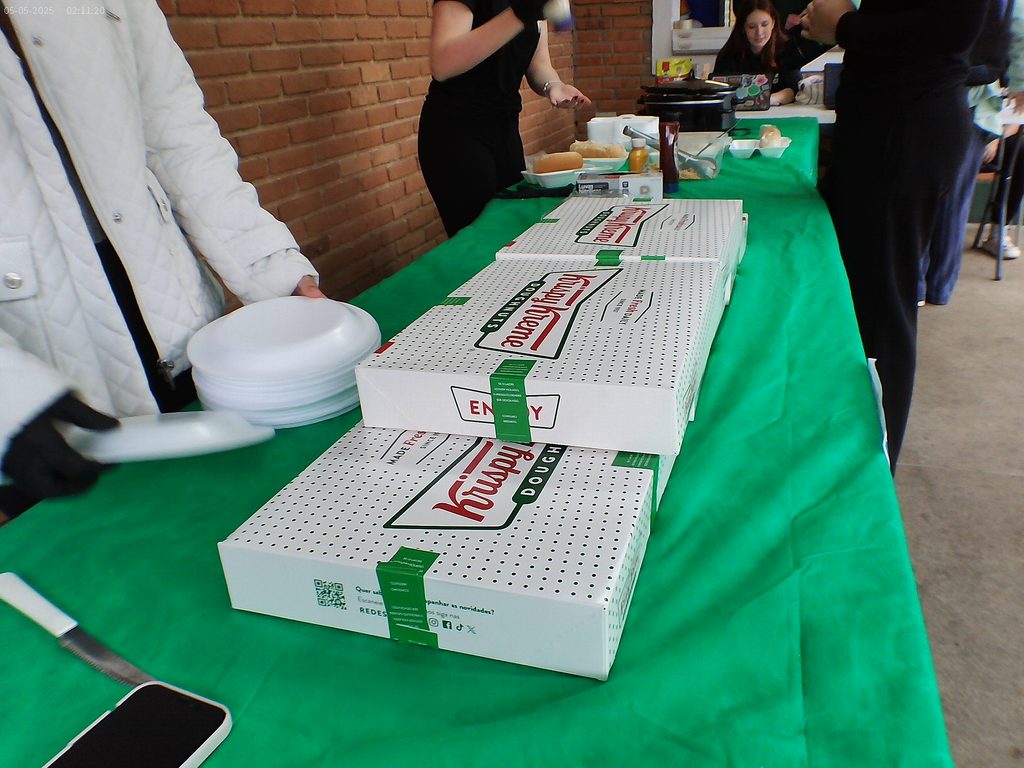
One of the challenges is learning how to cooperate with each other to make things work. The class officers can encourage their classmates to donate money and food or to volunteer their time to serve, but not everyone wants to be involved. Some classmates can’t help because of their schedule or family responsibilities after school, and others are simply not interested. When class officers organize their dinner, they search for the most responsible and willing students who wish to help and serve others.
“We always want as many people as we can get to help us with class events,” said freshman class president, Marcelo Pasquali, “But if we force classmates to help us even if they don’t want to, some won’t have it as a priority and won’t get things done.”
Class officers are not the only ones who take care and inspire other class members; that is where the Homeroom teachers come in. Teachers have lots of experience to share with their students.
Dr.Meier took part in the creation of a better schedule when she started helping STUCO some years ago.
“It was very disorganized two years ago when I first started helping STUCO. Mr Souza created a spread sheet to send to stuco to help make sure that all home games would have a class dinner scheduled in advance. That helped to get more organized, last year went smoothly. A couple years ago nobody would serve, but not because they didn’t want to. They just didn’t know there was an opportunity for specific home games,” said Dr. Meier.
The new STUCO treasurer this year is Ysabel Flurry. She sees the importance of class dinners as an opportunity for relationship building within each high school grade at PACA. She sees it as a chance for students to master new things such as conversations, leadership and stewardship.
“Not only do class dinners bring money to the class and feed the fellow parents who cheer on their child, but it also builds a relationship with your classmates. During those hours of working you learn how to work as a team while talking and laughing with each other,” says Flurry.
Ysabel Flurry also advised freshmen, future class dinner hosts and treasurers on what to do with money and how to handle communication.
“I would advise them to be accountable and responsible for all the events and money that comes in and out,” said Flurry. “It’s not easy being a treasurer but it’s important to communicate with fellow officers and teachers so that they are aware of what is going on and can help you with any need.”
According to Flurry and others who have participated in class dinners over the years, coordinating an event that was created to satisfy one’s hunger and motivate parents to cheer for our school is no easy task.
Thanks to all class officers, teachers, and STUCO members, class dinners could become a memorable moment for all the PACA community. If everyone helps as they should, they will meet new people, have fun with their friends, and gain money for their classes.